所屬科目:台大◆資工◆資料結構與演算法(A)
Please select all the correct answer(s) to question 1 to 10. Note that there could be O to 5 correct answ wers. If non answer is correct, answer "none". If you do not wish to answer a question, leave it blank. All 10 answer rs m must be written on the first page of your answer book, and the answer to question 1 must be in the first line, the answer to question 2 must be in the second line, and so on. If you fail to follow these rules then your answers will be ignored. ne of the a 1. (3 points) Let f(n) be the number of additions in the following algorithm. 1.f(n)=2. f(n)=O(n2logn) 3. f(n)=O(n3) 4. f(n)=O(n3logn) 5. f(n)=
2. (3 points) Given two sorted list A and B (in increasing key order), the following recursive algorithn merges A and B into a sorted list C (also in increasing key order). ㆍ If either A or B is empty then the result is the other list. ㆍ If both A or B are not empty, we compare the keys of the first nodes of A and B, and select the smaller one (denoted as s), and remove it from the list. Then we recursively merge the remaining parts of A and B into a new sorted list C', then we concatenate s with C' into the iral sorted list Let f(n, m) be the minimum number of comparisons of this algorithm, where n and m are the numbers of nodes in A and B respectively. f(n,m) is? 1.Ω(n) 2. Ω(m) 3. Ω(n +m) 4. Ω(mn) 5.Ω(mar.(logm +logn))
3. (3 points) We now use the merge algorithm in the previous question to sort a set of keys. We irst make each key a list of a single node. Then we merge the first and the second lists into a sorted list of length two, the third and the fourth lists into a sorted list of length two, and so on. If we start with n keys now we have roughly n/2 sorted list of length two now. We then merge these lists of length two into roughly n/4 sorted list of length four, and so on. Finally we will have a sorted list of length n. Let f(n) denote the mazimum possible total number of comparisons of this algorithm, then f(n) is? Note that all the answers are in little-o notation. 1.o(n) 2. 3.o(nlogn) 4.o(n(logr)2) 5.o(n2)
4. (3 points) A binary minimun heap is a binary tree in which every level is completely full, except the last level, which is filled from the left to right. Here the level of a node is its distance to the root, so the root has leve! O and the children of the root will have level 1, and so on. Also the key of a parent is less than those of its children. For ease of discussion we assume that all keys in the heap are distinct. Now which of the following descriptions about a binary minimum heap of 10 nodes (see the igure below) are correct?1. The second smallest key is always in level 1. 2. The largest key is always in a leaf, ie., a node without any children. 3. The second largest key is always in a leaf. 4. Let n be the number of nodes and we consider the case of arbitrary n, then the height of the tree is θ(logn). 5. Let n be the number of nodes and we consider the case of arbitrary n, then we can find the thind stnallest key of the beap by O(1) key comparisons.
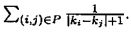
6. (3 points) A randomized quick sort works as follows. For ease of discussion we assur me that the sequence we want to sort, K = (k1,... .,kn), is a pernutution of 1 to n. We randomly and uniformly pick a key & from K. Then we partition K into two subsets - Ki that has keys less than k and K1 that has keys greater than k. Then we recursively sort K1and K2, and combine the results with k to get the sorted sequence. 1. The number of key comparisons will always be max aunized when the keys in K are already sorted. 2. Let |K1| and|K2|be the number of keys in K1 and K2 respectively. The expected value of max(|K1|,|K2|) is n. 3. The algorithm will compare two keys &: and ky at most ouce, so the numnber of key comparisons is O(n2). 4. The probability that the algorithm will compare ky and ly (n2i> jZ 1) is 5. Let P= {(i,j)|1≤i,,j ≤ni≠j}. The expected total number of key comparisons is
8. (3 points) A randomized linked list sorting algorithm works as follows. We want to build a linked listin which the keys are in increasing order. That is, every node has a smaller key than its successor inthe list. For ease of discussion we assume that the keys are distinct in integers from 1 to n. The algorithnrandomly picks a key from the rem maining keys, and inserts it into the list. This prokeys are inserted. The inserted key k will skip those at the beginning of the list that are smaller thanocess repeats until allit, and will stop at the first key p that are greater than it. We then insert the key k before p. To ensurethat all keys will stop we assumne that initially the list has only one key, n + 1. After we insert all keyswe will have a sorted linked list from 1 to n + 1.1. Every inserted key will stop exactly once. 2. The smallest key 1 will not skip any keys.3. The largest key n will always skip n–1 keys. 4. The expected number of keys that the key i will skip is Ω(i).
(b) (6 points) Consider the special case that the distance difference between two cousecutive stations is I, ie,-li= 1 (1 ≤i ≤n -1). Give an O(n) solution by defining a recurrence formula for f(n). Clearly explain the meaning of your formula and why it can be computed in O(n) time.
(a) (9 points) Given an undirected graph G = (V,E), where V = {u1,...um} (m > 0) and E = {e1,...,en) (n > 0), devise an algorithm to check if the graph G is a tree or not by using UNION(ui,uj) with union-by-height and FIND(uk) with no path com pression, where Ui,Us and Uk V. Clearly describe your solution and analyze the tinre cumplexity of your algorithm in the worst case. No code is required (code will not be graded).
 阿摩線上測驗
登入
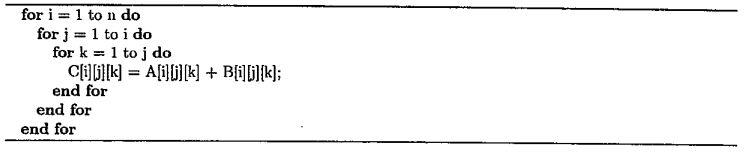 1.f(n)=


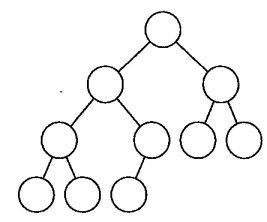
 n.

 -li= 1 (1 ≤i ≤n -1). Give an O(n) solution by defining a recurrence formula for f(n). Clearly explain the meaning of your formula and why it can be computed in O(n) time.
 V. Clearly describe your solution and analyze the tinre cumplexity of your algorithm in the worst case. No code is required (code will not be graded).