阿摩線上測驗
登入
首頁
>
教甄◆室內空間設計科/多媒體設計科/多媒體動畫科/廣告設計科
>
111年 - 111 臺北市市立高級中等學校正式教師聯合甄選:廣告設計/室內設計#107353
> 申論題
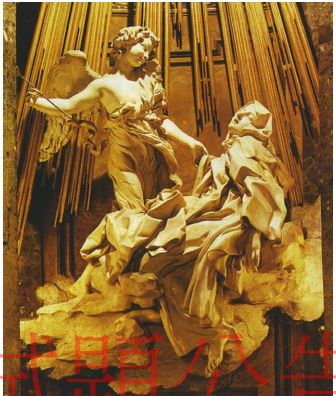
3. 此為Bernini的雕塑作品,請用「鉛筆素描」的方式,描繪於自行繪製的9×9cm格子 中(精簡呈現,著重形體、結構、光影、立體感等...的精準度)。(10分)。
相關申論題
4. 請用「三點透視,以鉛筆,徒手」呈現這張包浩斯經典的椅子,描繪於自行繪製的7×7cm格子中(著重透視精準度、線條、質感表現)。(10分)。
#459246
5. 請以此等角圖,繪製正投影三視圖(每格代表10mm,以第三角法呈現,必須保留鉛 筆作圖線,正確的線上墨,需符合CNS規定)。(10分)。
#459247
6. 已知橢圓中心線長邊為90mm,短邊為60mm,用四圓心近似法,做一橢圓後,並 將其繪製成深度30mm的等斜圖,深度於右側(不用上墨,輪廓線加重,必須保留鉛 筆作圖線,否則不計分)。(10分)。
#459248
1. 中翻英 (10 分) COVID-19 大流行(病)給全世界帶來有關全球供應鏈的慘痛教訓。產品短缺和供應中 斷是價格上漲的潛在因素之一。在全球範圍內,大流行導致航運網絡出現瓶頸,並擾亂 了國際供應鏈中的貨物流動。COVID 供應中斷很明顯可以從零售層面的產品短缺中發 現,在危機開始一年後仍然是通膨的重要驅動因素。
#459249
(1) Summarize the attached article (The Metaverse – Why It Is More Than Hype) into a 200-250 word passage. (15 分)
#459250
(2) Based on the passage, design 3 reading comprehension check questions, one of which shall be the pattern of competency-based type. (15 分)
#459251
3. 申論題 (20 分) Presentation skills have been one of the focal points in Applied English Department. If you are the mentor for the player, who is about to attend Business English of National High School Commercial Skills Competition, how are you going to assist this student in the training session? Please elaborate on your teaching plan in a semester or an academic year. Attached Article The Metaverse – Why It Is More Than Hype How business evolves in the virtual reality Since Mark Zuckerberg announced his Metaverse mission, it has become hype. If Zuckerberg has his way, large parts of our social life will soon take place in the Metaverse. Since this future is very likely in view of the rapidly evolving technological developments, especially in the fields of artificial intelligence and virtual reality, it is worth taking a look at what lies ahead of us. What exactly is the Metaverse? What exactly will be behind Zuckerberg’s “The Metaverse” in particular, we will certainly find out in the near future. There is no clear definition for the metaverse in general. It can be compared to the early days of the Internet, where there was also no clear idea of what we perceive as the Internet today. Generally speaking, the metaverse is understood as a virtual world, which on the one hand is technologically characterized by virtual reality and augmented reality and exists independently of individual users. Unlike a classic (virtual reality) game, which I start and finish, the existence of the virtual world is permanent and individuals enter and leave it to participate. Today, platforms such as Roblox and Fortnite, which have gaming at their origin, are counted as metaverses. Economy in the Metaverse In addition to the social aspects, the metaverse is characterized by a digital economy. This is precisely why it has become so interesting for brands like Adidas, Nike, Gucci and Balenciaga in recent months. This is about far more than opening up new advertising opportunities and sales channels for their own physical products. Completely new markets for native digital products are already emerging in the metaverse, which the big brands want to occupy. If they fail to do so, they will be threatened by digital-native brands that hardly anyone outside the bubble is aware of today. What may seem like a bad joke to many has the potential to become the new top brand. We are talking about NFTs like BoredApe and CloneX. First in the headlines in view of the seemingly horrendous sales sums of NFTs, they quickly developed into the status symbol of the crypto community and are now stepping up to become a brand themselves. May it be rational or irrational motives that lead to these developments. They are all based on human behavior that has been known for a long time. The only difference to the development of traditional brands is that the digitally native emergence of brands is significantly accelerated, even disruptive. To understand why the positioning of the brand in the metaverse makes a lasting contribution to the business model, I recommend my article “Crypto Assets – A social capital game“. The natively digital supply chain also offers the opportunity for the so-called Creator Economy. By removing hurdles on both the production and marketing sides, creators can for the first time interact and transact directly with consumers. Through NFT and tokenization, copyrights and ownership rights can be digitally fixed so that digital business models can be natively mapped onto them without the need for the mediator in the physical world that is required today. Relevance beyond art & gamingSo is the metaverse only relevant for companies in the gaming, art and consumer goods sectors? With the latest commitment of companies like Microsoft to the Metaverse, it should be clear: Not at all! Just as the Internet is a basic infrastructure for all businesses today, so will the Metaverse be in the future. Some examples of this: Before the pandemic, face-to-face meetings were commonplace. I, as well, sometimes traveled all day to attend a 1-hour meeting. Fortunately, that has changed radically. Today, remote digital collaboration is commonplace. Still, video conferencing collaboration is not yet completely comparable to a physical meeting. VR and AR technology will significantly improve the user experience of online meetings. But more than that, in the business metaverse we will be able to collaborate with colleagues globally as if we were sitting locally in an office. The physical company headquarters and “the office” will no longer play a major role. Working in global teams will become a matter of course in the metaverse, even for smaller companies. The traditional employee relationship will also change. What we are already seeing in the Creator Economy will continue. Traditional ties to one employer will gradually be replaced by competence networks in which professionals organize themselves to perform work in various projects. In recruiting, the digital business self, i.e., the employee’s track record, will play a leading role. Companies that can recruit in the virtual space and integrate employees into virtual teams will gain significant market advantages. Existing business models will also change. Let’s look at the automotive industry, for example. Here, work is being done on concepts for linking virtual worlds with mobility. Companies like Holoride are already addressing this market today. Metaverse – The next evolutionary stage of the Internet? Is the Metaverse simply a further development of the existing Internet? Unfortunately, this question must be answered with YES and NO. The Internet in its origin is planned as a network, which enables an open exchange of data and thus a decentralized growth through interoperability of the protocol level. The metaverse in the spirit of Zuckerberg is rather a continuation of the social networks, which are already today attacking the privacy and data autonomy of the users. The metaverse extends the idea of social networks to almost all areas of life. An individual’s participation in a permanently existing metaverse is associated with the emergence of a comprehensive digital self. If one leaves a digital footprint on the Internet through one’s behavior, one’s digital personality is created in the metaverse. Even though one can be anything in Zuckerberg’s metaverse vision, everything is controlled by a private company. The freedom to choose the skin color of one’s avatar does not mean sovereignty over his or her own data. Such an understanding of the Metaverse is therefore already no further development of the Internet idea, since here open protocols and interoperability are replaced by closed systems that control the digital self, i.e. the identity of the user. Openness is only created for commercial purposes. If the metaverse is understood and implemented in this way, then it can be seen as a threatening continuation of social media, which can lead to a dilemma for fundamental human rights. Efforts to create an open metaverse based on the fundamental principles of the Internet represent an alternative to this dystopian development. The basis for this is the Web3.0 movement with decentralized approaches to digital identities, transactions and the digitization of property. Source: https://morethandigital.info/en/the-metaverse-why-it-is-more-than-hype/
#459252
1. 請利用節圓半徑R,角速度W及鏈節半角θ,繪圖說明鏈條傳動時發生弦線作用∆R 為多少? (4分) 要如何減少弦線作用的方法? (2分)
#459253
2. 如下圖(六),所示之簡支樑,右方凸字型為樑之斷面,o-o軸為形心軸,試求 此樑所生成最大之正交應力為何? (4分) 在樑及斷面何處? (2分)
#459254
(1)可舉起重物W為多少kg?(3分)
#459255
相關試卷
115年 - 115 教育部受託辦理公立高級中等學校教師甄選試題:室內空間設計科/廣告設計科/室內設計科/美工科#139615
115年 · #139615
115年 - 115-1 臺北市立松山家商_教師甄選初試試題(術科)_廣告設計科:基礎圖學(專業一)#138905
115年 · #138905
115年 - 115-1 臺北市立松山家商_教師甄選初試試題(術科)_廣告設計科:電腦繪圖#138797
115年 · #138797
115年 - 115-1 臺北市立松山家商_教師甄選初試試題(術科)_廣告設計科:基礎圖學(專業一)#138385
115年 · #138385
115年 - 115-1 臺北市立松山家商_教師甄選初試試題(術科)_廣告設計科:電腦繪圖#138384
115年 · #138384
115年 - 115-1 臺北市立松山家商_教師甄選初試試題(術科)_廣告設計科:設計繪畫#138383
115年 · #138383
114年 - 114 教育部受託辦理公立高級中等學校_教師甄選:廣告設計科#127281
114年 · #127281
114年 - 114 高雄市市立高級中等學校_聯合教師甄選試題:室內設計科#127277
114年 · #127277
113年 - 113-1 臺北市立松山高級商業家事職業學校教師甄選試題:室內設計科#120597
113年 · #120597
113年 - 113 教育部受託辦理公立高級中等學校教師甄選試題:廣告設計科、多媒體設計科、室內空間設計科#119699
113年 · #119699