所屬科目:研究所、轉學考(插大)◆普通物理學
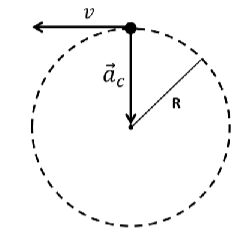
1. (10%) As the sketch shows, please prove the centripetal acceleration (\( \vec{a}_c \)) of uniform circular motion is equal to: \( \vec{a}_c = \frac{v^2}{R} \) (\( v \): the velocity of the motion particle) (\( R \): the radius of the circular motion)
(a) Find out its location of center of mass. [i.e. \( (\text{x}_{\text{com}}, \text{y}_{\text{com}}) \)] (利用變數 R 表示)
(b) According to the rotational inertia of the plate rotating around a perpendicularaxis through lettered points, A, B, C and D, rank them. (Briefly explain thereasons.)
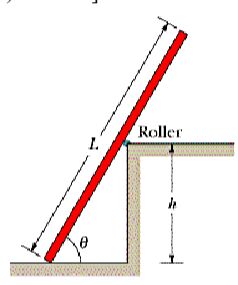
3. (15%) In the figure, a uniform plank, with a length L of 10.5 m and a weight of445 N, rests on the ground and against a frictionless roller at the top of a wall ofheight h = 3.05 m. The plank remains in equilibrium for any value of θ≧70.0°but slips if θ < 70.0°. Find the coefficient of static friction between the plank andthe ground. [*Note: cos (70°) = 0.342]
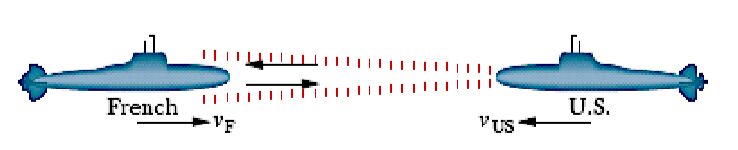
4. (10%) In the figure, a French submarine and a U.S. submarine move toward each other during maneuvers in motionless water in the North Atlantic. The French sub moves at speed \( v_F = 48.00 \text{ km/h} \), and the U.S. sub at \( v_{US} = 72.00 \text{ km/h} \). The French sub sends out a sonar signal (sound wave in water) at \( 1.560 \times 10^3 \text{ Hz} \). Sonar waves travel at \( 5470 \text{ km/h} \). What frequency will be detected by the French submarine in the signal reflected back to it by the U.S. submarine?
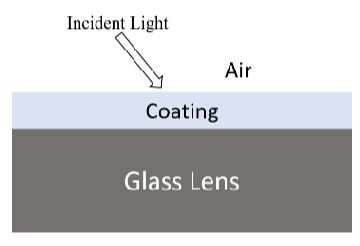
5. (10%) In the figure, a lens with a refractive index of 1.5 is coated with a material of refractive index 1.2 in order to minimize reflection. If \( \lambda \) denotes the wavelength of the incident light in air, what is the possible thinnest thickness of such coating layer? (Briefly explain the reasons.) (利用變數\( \lambda \)表示)
(a) Find the current across R3, once the switch S is suddenly closed at t = 0.
(b) Suppose the switch has been closed for a time interval sufficiently long for thecapacitor to be fully charged. Find the electric energy stored in the capacitorC.
(a) Find the lowest frequency that generates a standing wave having the joint as oneof the nodes.
(b) How many nodes are observed at this lowest frequency, including the end nodes?
 阿摩線上測驗
登入