所屬科目:研究所、轉學考(插大)◆普通物理學
1. Consider a rocket of mass MR carries its fuel of mass MF. The speed of the rocket varies as the burnt fuel is expelled. The velocity of the exhaust gas relative to the rocket is vex. If the initial velocity of the rocket is zero, what the velocity of the rocket is when the fuel is depleted? (A)(B) (C)(D) (E)
2. A vertical chain has a length L and a mass M. It is released with the bottom just touching a table as shown in the right figure. The force on the table varies with time. What is the maximum force on the table? (A) Mg (B) 2Mg (C) 2.5Mg (D) 3Mg (E) 4Mg where g is the gravitational acceleration.
3. Water emerges from a small opening at a height h from the bottom of a large container, which is filled to a constant depth H. What is the distance R from the base at which water hits the ground? (A) (B)(C)(D) (E)
4. A block of mass m = 0.4 (kg) is placed on a block of mass M = 0.8 (kg) as shown in the left figure. The coefficient of kinetic friction for all surfaces is μk = 0.1. Ignore the pulley and the rope. For what value of the horizontal force F will the blocks move at constant speed?(A) 0.98 Nt (B) 1.18 Nt (C) 1.57 Nt (D) 1.96 Nt (E) 2.35 Nt
5. The Kepler's second law of planetary motion is that the line joining the sun to a planet sweeps out equal areas in equal times. Which one of the following principles is the fundamental of Kepler's second law? (A) second law of thermal dynamics (B) conservation of linear momentum (C) conservation of angular momentum (D) conservation of energy (E) Hooke's law
6. Consider an ideal gas system. Which one of the following physical quantities is not a "state variable"? (A) heat (B) volume (C) pressure (D) temperature (E) density
7. The Temperature(T)-Entropy(S) diagram of the Carnot cycle is shown in the right figure (solid line). What area in the T-S diagram represents the work done by the system in each cycle?(A) α (B) β (C) γ (D) α + β (E) β + γ
8. Which one of the following statements of the second law of thermodynamics is wrong? (A) It is impossible for a heat engine that operates in a cycle to convert its work input completely into heat. (B) It is impossible for a cyclical device to transfer heat continuously from a cold body to a hot body without the input of work or other effect on the environment. (C) No cyclical heat engine has a greater efficiency than a reversible engine operating between the same two temperatures. (D) In a reversible process the entropy of an isolated system stays constant; in an irreversible process the entropy increases. (E) None of the above is wrong.
9. Assume v is the speed of sound and f₀ is its frequency. If the sound source S moves toward an observer O at speed v_S and the observer O moves away from the sound source S at speed v_O. What is the frequency heard by O? (A) (B) (C) (D) (E)
10. A uniform disk of mass m and radius R is hanged as a physical pendulum as shown in the right figure. What is the oscillation period of that pendulum? (A) (B)(C) (D) (E)where g is the gravitational acceleration.
11. A charge q sits at the back corner of a cube, as shown. The length of its edges is L. What is the flux of electric field E through the shaded side of the figure? (A) (B) (C) (D) (E)
12. As shown in the figure, a copper strip of width d = 2 (cm), carrying a current i = 100 (mA) is put in an external magnetic field B = 0.02 (Tesla). A potential difference ΔV = VL - VR is measured to be 5 (mV). What is the drift velocity vd of the charge carrier? (A) 1.25 m/s (B) 2 m/s (C) 2.5 m/s (D) 12.5 m/s (E) 25 m/s
13. The pattern of capacitors of equal value C shown in the right figure is repeated indefinitely. What is the effective capacitance between the terminals A and B? (A) (B) (C) (D)(E)
14. The circuit in the right figure has reached steady-state condition, where V = 12 (volt), R₁ = 2 (ohm), R₂ = 4 (ohm), and C = 1 (μF).What is the potential difference across resistor R₁?
(A) 12 volt (B) 2 volt (C) 6 volt (D) 8 volt (E) 4 volt
15. The magnetic field of an electromagnetic wave is written as B(x, y, z, t) = B₀ ex cos(kz - ωt), where B₀ is the amplitude, ex is the unit vector along x-axis, k is the wave number, and ω is the angular frequency. What is the electric field of this wave? (A) E(x, y, z, t) = -cB₀ ey cos(kz - ωt) (B) E(x, y, z, t) = cB₀ ez sin(ky - ωt) (C) E(x, y, z, t) = -(B₀/c) ez cos(kz - ωt) (D) E(x, y, z, t) = cB₀ ey sin(kz - ωt) (E) E(x, y, z, t) = (B₀/c) ey cos(ky - ωt) where c is the speed of light, e_y and e_z are the unit vectors along y-axis and z-axis respectively.
16. A rod of 1-m proper length moves relative to an observer with velocity v = 3/5 c, where c is the speed of light. What is the length of the rod measured by the observer? (A) 0.6 m (B) 0.64 m (C) 0.8 m (D) 1 m (E) 1.25 m
17. Which one of the following concepts is verified by the Compton scattering effect? (A) quantization of the energy of bound electrons in atom (B) quantization of the energy of an oscillator (C) quantization of the energy of the electromagnetic field (D) quantization of the angular momentum of the electromagnetic field (E) quantization of the linear momentum of the electromagnetic field
18. The wave function of the 1s state in hydrogen atom as a function of radius r is written aswhere r₀ is the Bohr radius. What is the expectation value of radius r? (A) 3r₀ (B) 2r₀ (C) 1.5r₀ (D) r₀ (E) 0.5r₀
19. The structure of the periodic table is resulted from what physical principle? (A) Fermat's principle of least time (B) Heisenberg's uncertainty principle (C) Pauli's exclusion principle (D) Huygens' principle of wave propagation (E) complementarity principle of wave-particle duality
20. Which one of the following process is not a nuclear reaction? (A) emission of alpha particle from ²²⁶Ra (B) fission of ²³⁵U (C) fusion of ¹H to be ⁴He (D) ionization of ¹H to be electron and proton (E) proton emission from ⁸⁷Br
 阿摩線上測驗
登入
 (B)
 (C)
 (D)
 (E)

 (A) Mg (B) 2Mg (C) 2.5Mg (D) 3Mg (E) 4Mg
 (A)
 (B)
 (C)
 (D)
 (E)

 (A) 0.98 Nt (B) 1.18 Nt (C) 1.57 Nt (D) 1.96 Nt (E) 2.35 Nt
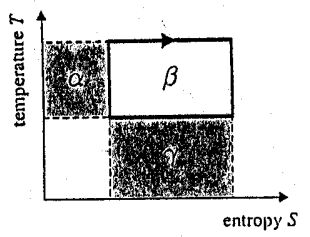 (A) α (B) β (C) γ (D) α + β (E) β + γ
 (B)
 (C)
 (D)
 (E)

 (A)
 (B)
 (C)
 (D)
 (E)

 (A)
 (B)
 (C)
 (D)
 (E)

 (A) 1.25 m/s (B) 2 m/s (C) 2.5 m/s (D) 12.5 m/s (E) 25 m/s
 (A)
 (B)
 (C)
 (D)
 (E)

 (A) 12 volt (B) 2 volt (C) 6 volt (D) 8 volt (E) 4 volt
