阿摩線上測驗
登入
首頁
>
教甄◆物理科專業
>
114年 - 114-1 臺中市立臺中第一高級中等學校_教師甄選試題:物理科#126073
> 申論題
題組內容
30、有一半徑為R的半圓環,
為此環平行地面的直徑。若有一小球從 A 點以速度V水平拋出,重力加速度為 g,不計空氣阻力。
(1)要使小球落到環上的鉛直速度最大,則V為多少?(2 分)
相關申論題
(2)請問是否有一個V值,可以使小球垂直撞擊到半圓環。若有請求出相應的值; 若沒有請說明理由。(3 分)
#535368
31、有一大型起重機要將地面上的貨物吊到 90 m的高處。已知貨物的質量為 80 kg,起重機繩子可承受的最大拉力 為 1200 N;馬達最大輸出功率為 12 kW。操作員先讓繩子以最大拉力作用一段時間直到馬達到最大功率後,接著維持最大功率繼續運轉,當貨物到終點時恰好到達最大速度,請問這件工程花費多少時間?(5 分)
#535369
32、中空圓筒形導體中的電流所產生的磁場,會對其載流粒子施加磁力,故被用於設計能提供安全核能且燃料不虞匱 乏的核熔合反應器。如圖所示為筒壁很薄、半徑為R的鋁製長直圓筒,電流I平行於筒軸穩定流動,均勻通過筒壁 各截面,而可當作為n條完全相同且平行的長直載流導線,每條導線的電流 都為i =。若n比 1 大得多,並以代表每單位面積垂直作用於筒壁的磁力。請依據題目的假設,試問為多少?
#535370
一、混合題出題(20分)請仔細閱讀以下文章後,先摘要改寫成約300字的文章,再設計符合大考新式學測的混合題 題組(共五小題),並附上正確答案。出題類型包含選擇題、填充題、簡答題、整合歸納題型等。In 1987 Gordon Gekko, the unscrupulous cigar-smoking powerhouse in the film Wall Street, told the world: greed is good. The movie ultimately a cautionary tale-depicted work and wealth-obsessed executives putting in long hours in sleek skyscrapers to seal deals and boost their pay packets, at the expense of whoever got in their way. If you live and breathe work (and toss in some moral flexibility), the message was, the rewards will be exciting and immense. Although many of us associate overly ambitious workaholism with the 1980s and the finance industry, the tendency to devote ourselves to work and glamourise long-hours culture remains as pervasive as ever. In fact, it is expanding into more sectors and professions, in slightly different packaging.New studies show that workers around the world are putting in an average of 9.2 hours of unpaid overtime per week-up from 7.3 hours just a year ago. Co-working spaces are filled with posters urging us to "rise and grind" or "hustle harder". Billionaire tech entrepreneurs advocate sacrificing sleep so that people can "change the world." And since the pandemic hit, our work weeks have gotten longer; we send emails and Slack messages at midnight as boundaries between our personal and professional lives dissolve.Overwork isn't a phenomenon exclusive to Silicon Valley or Wall Street. People work long hours all over the world, for many different reasons. In Japan, a culture of overwork can be traced back to the 1950s, when the government pushed hard for the country to be rebuilt quickly after World War Two. In Arab League countries, burnout is high among medical professionals, possibly because its 22 members are developing nations with overburdened healthcare systems, studies suggest. But millions of us overwork because somehow we think it's exciting a status symbol that puts us on the path to success, whether we define that by wealth or an Instagram post that makes it seem like we're living a dream life with a dream job. Romanticisation of work seems to be an especially common practise among "knowledge workers" in the middle and upper classes. In 2014, the New Yorker called this devotion to overwork "a cult". "We glorify the lifestyle, and the lifestyle is: you breathe something, you sleep with something, you wake up and work on it all day long, then you go to sleep," says Anat Lechner, clinical associate professor of management at New York University.In parallel with this work-worship, however, came an unpleasant consequence-burnout. "Burnout has cycles like it gets rediscovered, then it dies down, and gets rediscovered again," says Christina Maslach, professor emerita of psychology at the University of California, Berkeley. The World Health Organization defines burnout as a syndrome "resulting from chronic workplace stress that has not been successfully managed", characterised by feelings of exhaustion, negative feelings about a job and reduced professional efficacy. In other words, it leaves you feeling dehumanised, physically and emotionally exhausted, and questioning why you took the job in the first place.In March, 2021, a mock employee survey by 13 first-year analysts at Goldman Sachs found its way into the public eye. Respondents said they averaged 95-hour workweeks and slept five hours a night. "This is beyond the level of 'hard-working', this is inhumane/abuse," said one respondent to the survey. In response, some companies have begun talking about offering more robust mental-health programmes for workers, including perks like complimentary therapy sessions or free access to wellness apps. Yet, experts think it is highly unlikely that we're entering a new era that prioritises wellbeing over overwork. For example, while technology has made it possible for us to work from home indefinitely, it also ties us to work all day long. If there's a group call where workers dial in from London, Tokyo, New York and Dubai, some people will have to wake up at 0200 to dial in. If they don't, the company will find someone who will - because as long as we glamourise money, status and achievement, there will always be people who work hard to get them. "If you take a plant and put it in a pot and don't water it and give it lousy soil and not enough sun, I don't care how gorgeous the plant was to begin with - it isn't going to thrive," says Maslach.
#535371
三、英文寫作(15分) Please (1) write a model descriptive paragraph based on the following picture (200 words in length), (2) analyze the common problems students typically face when writing a descriptive paragraph, and (3) explain how you would teach and guide students to master descriptive writing.(圖片取自110年學測)
#535372
四、申論寫作(15分)Most of the students at our school choose the science track over the social science track. In the subject of English, what do you think makes a "useful" learning portfolio for their college admissions to science programs?
#535373
II. Examination Questions Design ( A ) Rewrite the passage in approximately 250 words, keeping the main ideas and key points while making it appropriate for 11th -grade students. Then, create a cloze test with five multiple-choice questions, each with four answer choices. Provide the correct answer for each question. The notion that consuming coffee immediately upon waking is detrimental has gained significant traction on social media. Wellness advocates and influencers often recommend delaying caffeine intake by 90 to 120 minutes after waking to mitigate the purported risks of an afternoon energy slump and enhance sleep quality. This practice is sometimes hailed as a transformative strategy for optimizing energy levels. However, it is essential to scrutinize these claims through the lens of scientific evidence. To critically evaluate this assertion, it is crucial to comprehend the physiological mechanisms underlying caffeine's effects on the human body. Throughout the day, the brain synthesizes adenosine, a neurotransmitter that induces somnolence by binding to specific receptors. Caffeine functions as an adenosine receptor antagonist, thereby enhancing alertness by blocking these receptors. Notably, caffeine's effects are not instantaneous. Dr. Michael Grandner, Director of the Sleep and Health Research Program at the University of Arizona, notes that it typically requires 20 to 30 minutes for caffeine to reach the brain and exert its effects. The duration of these effects varies significantly among individuals, primarily due to genetic variability in caffeine metabolism. One rationale for postponing caffeine consumption is predicated on the fluctuations in adenosine levels. Given that adenosine concentrations naturally diminish during sleep, they are at their nadir upon waking. The theoretical underpinning is that consuming coffee immediately after waking may yield a less pronounced stimulatory effect compared to waiting until adenosine levels have increased. Dr. Grandner acknowledges the validity of this rationale and personally adopts a delay of 30 to 60 minutes before consuming his first cup of coffee. However, it is crucial to note that there is no universally accepted scientific consensus regarding the optimal timing for caffeine intake, as individual preferences play a significant role. Another potential justification for delaying caffeine intake is for individuals who limit themselves to a single cup per day. By postponing consumption until later in the morning, they may potentially prolong the effects of caffeine into the afternoon, thereby mitigating the likelihood of a mid-day energy decline. In reality, there is a dearth of robust scientific evidence to support the notion that consuming coffee immediately upon waking is detrimental or that delaying it confers substantial benefits. Dr. Marilyn Cornelis, a prominent caffeine researcher at Northwestern University Feinberg School of Medicine, underscores that caffeine's effects are highly variable among individuals, with some metabolizing it rapidly and others experiencing more prolonged effects. For individuals experiencing afternoon energy fluctuations, adjusting caffeine intake may be beneficial, but delaying morning coffee consumption is not the sole solution. Factors such as sleep quality, dietary habits, and hydration status play a more significant role in maintaining consistent energy levels throughout the day. The notion that consuming coffee immediately upon waking is inherently detrimental is more akin to a social media trend than a scientifically substantiated fact. While delaying caffeine intake may be beneficial for certain individuals, it is not a universally applicable principle. If you derive satisfaction from your morning coffee immediately upon waking, there is no compelling scientific rationale to alter this routine.
#535374
( B ) Design five reading comprehension questions based on the following passage. Include three multiple-choice questions and two competency-based questions.Provide the correct answer for each question. Chimamanda Ngozi Adichie, as a storyteller, emphasizes the danger of the single story through personal anecdotes. Growing up in Nigeria, her early reading material consisted mainly of British and American children’s books. Consequently, her early writing featured white, blue-eyed characters who played in the snow and talked about the weather, despite her Nigerian context where such experiences were absent. This illustrated how impressionable children are to stories, leading her to believe that books inherently had to be about foreign experiences. However, this perception changed when she discovered African literature by authors like Chinua Achebe. This revelation reshaped her understanding of storytelling, showing her that people like her could also exist in literature. It saved her from having a single story of what books could be. Adichie’s awareness of the single story extended beyond literature to real-life experiences. She recalls the story of their houseboy, Fide, whose family was described only as poor. This limited perspective led her to see them solely through the lens of poverty. However, her assumptions were challenged when she saw a beautifully crafted basket made by Fide’s brother. This moment revealed a hidden dimension of their lives, showing her that people are always more than a single narrative. Her understanding deepened further when she moved to the U.S. for university. There, she encountered another single story— this time about Africa. Her American roommate assumed Africa was a place of catastrophe, filled with pitiable and incomprehensible people. This singular narrative ignored the continent’s complexity, diversity, and normalcy. Adichie traced the roots of this misrepresentation back to Western literature, citing a 1561 account that depicted Africans as monstrous beings. Such historical portrayals laid the foundation for enduring negative stereotypes. Recognizing the dangers of a single story, Adichie also reflects on her own biases. She acknowledges that she, too, once held a single story about Mexicans, shaped by the narratives in U.S. media. This self-awareness underscores how easily people, regardless of background, can fall into the trap of oversimplification. The repetition of a single narrative reduces a group to a single characteristic, stripping them of their complexity and humanity. The concept of "nkali," an Igbo word meaning “to be greater than another,” highlights how power determines which stories are told, how they are framed, and whose voices are amplified. Those with the power to control narratives can dictate how entire groups are perceived, often reinforcing imbalances and dispossessing people of their agency. However, Adichie clarifies that stereotypes are not necessarily false but incomplete. They flatten experiences, making one perspective the only perspective. To challenge this, she urges people to engage with multiple narratives. Only by listening to a diversity of voices can we avoid robbing others of dignity and recognize our shared humanity. This idea of "a balance of stories" is crucial in shaping a more just and accurate understanding of the world. To illustrate this, Adichie highlights the richness of Nigerian society—its thriving publishing industry, engaged readership, influential media personalities, medical advancements, vibrant music scene, legal activism, booming Nollywood film industry, and ambitious entrepreneurs. These examples counter the limited and often negative portrayal of Nigeria, revealing a dynamic and multifaceted reality. Ultimately, Adichie emphasizes that stories hold immense power—they can dispossess and malign, but they can also empower and humanize. Rejecting the single story allows us to reclaim a broader, more truthful vision of the world. By embracing the diversity of experiences, we restore complexity and, in Adichie’s words, regain a kind of paradise.
#535375
(1) What your teaching principles are when using AI tools in English courses, as well as the specific AI tools you are familiar with.
#535376
(2) How you will apply these AI tools to ensure that they effectively and efficiently assist students in developing the four skills, critical thinking, and creativity.
#535377
相關試卷
115年 - 115 教育部受託辦理公立高級中等學校教師甄選試題:物理科#141080
115年 · #141080
115年 - 115 臺北市立華江高級中學_正式教師甄選初試筆試試題:物理科#140574
115年 · #140574
115年 - 115 新竹市立香山高級中學_教師甄選試題:高中物理科#140138
115年 · #140138
115年 - 115 高雄市市立高級中等學校聯合教師甄選試題︰物理科#140113
115年 · #140113
115年 - 115-2 臺北市立成功高級中學_正式教師甄選初試試題:物理科#139963
115年 · #139963
115年 - 115-1 新北市立板橋高級中學_正式教師甄選試題:物理科#139537
115年 · #139537
115年 - 115 新北市公立高級中等學校_教師聯合甄選試題:物理科#139223
115年 · #139223
115年 - 115-1 國立竹東高級中學_教師甄試試題:物理科#138778
115年 · #138778
115年 - 115-1 台北市立中崙高級中學_教師甄選試題:物理科#138762
115年 · #138762
115年 - 115-1 臺中市立豐原高級中等學校_教師甄試試題:物理科#138731
115年 · #138731
 為此環平行地面的直徑。若有一小球從 A 點以速度V水平拋出,重力加速度為 g,不計空氣阻力。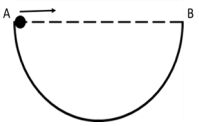
 阿摩線上測驗
登入
為此環平行地面的直徑。若有一小球從 A 點以速度V水平拋出,重力加速度為 g,不計空氣阻力。
阿摩線上測驗
登入
為此環平行地面的直徑。若有一小球從 A 點以速度V水平拋出,重力加速度為 g,不計空氣阻力。