所屬科目:研究所、轉學考(插大)◆普通化學
1. Progesterone made by the ovaries is known as a female sex hormone. Identify the functional group circled. (A) Alcohol (B) Ether (C) Aldehyde (D) Ketone (E) Ester
2. Which is a possible product of the chlorination of propane in the presence of light? (A) C₃H₇Cl (B) C₃H₃Cl (C) C₃H₂Cl₂ (D) C₃H₄Cl₂ (E) C₃H₅Cl
3. Consider a certain type of nucleus that has a halflife of 32 min. Calculate the time required for 52% of the nuclides to decompose. (A) 49 min (B) 34 min (C) 17 min (D) 23 min (E) 53 min
4. Both SiO₂ and CO₂ appear to have valid Lewis structures. Using the molecular orbital model, why then are CO₂ molecules stable and SiO₂ molecules unstable? (A) Silicon prefers to bond to other silicon atoms over oxygen atoms. (B) The carbon atom is larger than the silicon atom, giving carbon a higher electron density and thus better pi bonding. (C) The silicon 3p valence orbitals do not overlap very mainly with the smaller oxygen 2p orbitals. (D) CO₂ is able to form sigma bonds and SiO₂ is not. (E) At least two of the above are correct.
5. Which of the following pairs can be used to illustrate the law of multiple proportions? (A) CO and CaCO₃ (B) ZnO₂ and ZnCl₂ (C) H₂SO₄ and H₂S (D) CH₄ and CO₂ (E) NO and NO₂
6. A species with 13 protons and 10 electrons is (A) Al³⁺ (B) Mg²⁺ (C) Ne²⁺ (D) Ti²⁺ (E) Ne²⁻
7. What is the molar mass of ethanol (C₂H₅OH)? (A) 25.08 g/mol (B) 45.02 g/mol (C) 34.06 g/mol (D) 46.07 g/mol (E) 30.03 g/mol
8. An unknown substance dissolves in water but not in nhexane (a nonpolar solvent). Molecules of what type are present in the substance? (A) Nonpolar (B) Polar (C) Either polar or nonpolar (D) Neither polar nor nonpolar (E) None of these
9. Which of the following is a strong acid? (A) HF (B) H₂CO₃ (C) HClO₄ (D) HCN (E) H₂O₂
10. Diabetics often need injections of insulin to help maintain the proper blood glucose levels. How many moles of insulin are needed to make up 50 mL of 0.0062 M insulin solution? (A) 0.00093 mol (B) 0.00062 mol (C) 0.00016 mol (D) 0.00031 mol (E) 0.00124 mol
11. You have a certain mass of helium gas in a rigid steel container. You add the same mass of nitrogen gas to this container. Which of the following best describes what happens? Assume the temperature is constant. (A) The volume of the container doubles. (B) The volume of the container more than doubles. (C) The pressure in the container doubles. (D) The pressure in the container more than doubles. (E) The pressure in the container increases but does not double.
12. How much heat is required to raise the temperature of a 10.0 g sample of iron (specific heat = 0.450 J/g°C) from 25.0°C to 45°C? (A) 90 J (B) 180 J (C) 45 J (D) 22.5 J (E) 120 J
13. Which form of electromagnetic radiation has the longest wavelengths? (A) Infrared radiation (B) Radio waves (C) Microwaves (D) Ultraviolet radiation (E) Gamma rays
14. The complex FeL₆²⁺, where L is a neutral ligand, is known to be diamagnetic. The number of d electrons in this complex ion is: (A) 8 (B) 7 (C) 6 (D) 5 (E) 4
15. As indicated by Lewis structures, which of the following would probably not exist as a stable molecule? (A) CH₂O (B) CH₃O (C) C₂H₂ (D) CS₂ (E) CH₃CN
16. Which of the following molecules has no dipole moment? (A) NH₃ (B) HF (C) CH₃OH (D) H₂O (E) CO₂
17. Which of the following statements are true concerning ionic bonding? (A) MgCl₂ forms because Mg²⁺ is always a more stable species than the magnesium atom alone. (B) Compounds with ionic bonds tend to have low melting points. (C) Ionic bonding occurs between a metal, which has a high affinity for electrons, and a nonmetal, which loses electrons relatively easy. (D) The electronegativity difference between the bonding atoms of ionic compounds is small since the electrons are not shared but rather held together by electrostatic forces. (E) All of the above statements are false.
18. The hybridization of the carbon atom in the cation CH₃⁺ is: (A) sp (B) sp² (C) sp³ (D) dsp (E) None of these
19. Which of the following is the correct order of boiling points for KNO₃, C₂H₅OH, C₂H₄, and Ne? (A) Ne < C₂H₅OH < C₂H₄ < KNO₃ (B) KNO₃ < C₂H₅OH < C₂H₄ < Ne (C) Ne < C₂H₄ < KNO₃ < C₂H₅OH (D) Ne < C₂H₄ < C₂H₅OH < KNO₃ (E) C₂H₄ < Ne < C₂H₅OH < KNO₃
20. The rate expression for a particular reaction is rate = k[A][B]³. If the initial concentration of B is increased from 0.1 M to 0.2 M, the initial rate will increase by which of the following factors? (A) 2 (B) 4 (C) 6 (D) 8 (E) 1
21. Apply the law of mass action to finish the equilibrium expression for 2NO₂Cl(aq) ⇌ 2NO₂(aq) + Cl₂(aq). (A) K = [NO₂]²[Cl₂]/[NO₂Cl]² (B) K = [NO₂Cl]²[NO₂]²[Cl₂] (C) K = [NO₂Cl]²/[NO₂]²[Cl₂] (D) K = 2[NO₂Cl]/2[NO₂][Cl₂] (E) K = 2[NO₂][Cl₂]/2[NO₂Cl]
22. Given the following acids and $K_a$ values: HClO$_4$ (1$\times$10$^7$), HF (3.53$\times$10$^{4}$), HCN (4.93$\times$10$^{10}$), and CH$_3$COOH (1.76$\times$10$^{5}$). What is the order of increasing base strength? (A) \( \text{ClO}_4^-, \text{CH}_3\text{COO}^-, \text{CN}^-, \text{F}^- \)(B)\( \text{CN}^- \), \( \text{ClO}_4^- \), \( \text{F}^- \), \( \text{CH}_3\text{COO}^- \)(C)\( \text{ClO}_4^-, \text{F}^-, \text{CH}_3\text{COO}^-, \text{CN}^- \)(D)\( \text{CN}^- \), \( \text{CH}_3\text{COO}^- \), \( \text{F}^- \), \( \text{ClO}_4^- \)(E) \( \text{CN}^- \), \( \text{F}^- \), \( \text{CH}_3\text{COO}^- \), \( \text{ClO}_4^- \)
23. A weak acid (HCN) is in solution with dissolved sodium cyanide (NaCN). If HCl is added, which ion will react with the extra hydrogen ions from the HCl to keep the pH from changing? (A) Na$^+$ (B) \( \text{CN}^- \) (C) \( \text{Na}^- \) (D) \( \text{OH}^- \) (E) None of these
24. The correct mathematical expression for finding the molar solubility (s) of Sn(OH)2 is: (A) $K_{sp} = 108s^5$ (B) $K_{sp} = 8s^3$ (C) $K_{sp} = 2s^3$ (D) $K_{sp} = 2s^2$ (E) $K_{sp} = 4s^3$
25. You are told that metal A is a better reducing agent than metal B. This must mean that: (A) B$^+$ is a better oxidizing agent than A$^+$. (B) B$^+$ is a better reducing agent than A$^+$. (C) B is a better oxidizing agent than A. (D) A$^+$ is a better reducing agent than B$^+$. (E) A$^+$ is a better oxidizing agent than B$^+$.
 阿摩線上測驗
登入
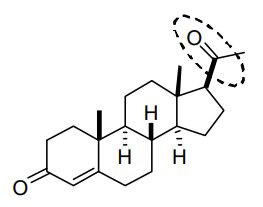 (A) Alcohol (B) Ether (C) Aldehyde (D) Ketone (E) Ester